
For many patients, the idea of straightening teeth sounds exciting—until they picture metal brackets, food restrictions, and extra time spent cleaning around wires. That is one reason clear aligners have become such a popular option. For people researching Invisalign in Pleasanton, CA, the good news is that modern orthodontic care can often be comfortable, discreet, and designed to fit into everyday life.
Invisalign uses a series of custom-made, removable clear aligners to gradually guide teeth into better positions. Because the aligners are nearly invisible and can be taken out for meals and brushing, many teens and adults appreciate how flexible they feel compared with traditional braces.
This article is for general education only and is not a diagnosis or treatment recommendation. Tooth movement, bite concerns, treatment time, cost, and results vary by person, so patients should consult a licensed dentist or orthodontic clinician for personalized advice.
What Is Invisalign?
Invisalign is a clear aligner system used to correct many common orthodontic concerns. Instead of brackets and wires, patients wear a sequence of smooth plastic trays that fit snugly over the teeth. Each aligner is shaped slightly differently, applying gentle pressure in carefully planned directions.
Patients typically wear each set of aligners for about one to two weeks, depending on the treatment plan. As the series progresses, the teeth gradually shift toward the positions planned by the dental professional.
In everyday terms, Invisalign works a little like a roadmap. The dentist or orthodontist identifies where the teeth are now, where they should ideally move, and the aligners guide that journey step by step.
Why Patients Consider Invisalign in Pleasanton, CA
Patients in Pleasanton often lead busy lives filled with work, school, family, sports, and social activities. A treatment option that blends into a normal routine can make orthodontic care feel less intimidating.
Clear aligners may appeal to patients who want a straighter smile without drawing extra attention to treatment. They can be especially helpful for adults who have delayed orthodontic care because they did not want visible braces, as well as teens who want a more discreet option for school and activities.
Another major benefit is convenience. Since aligners are removable, patients can continue eating most of their favorite foods. They can also brush and floss without working around brackets or wires, which may make it easier to keep teeth and gums healthy throughout treatment.
What Dental Concerns Can Invisalign Help Address?
Invisalign may help with a range of mild to moderate orthodontic concerns, and in some cases more complex issues may also be treated with careful planning. A consultation is the only way to know what is appropriate for a specific smile.
Crowded Teeth
Crowding happens when there is not enough room in the jaw for teeth to sit properly. Teeth may overlap, twist, or become harder to clean. Clear aligners can often create better alignment, which may improve both appearance and oral hygiene access.
Gaps Between Teeth
Spaces between teeth can occur because of tooth size, jaw size, missing teeth, gum health issues, or natural development. Invisalign may help close certain gaps and create a more even-looking smile.
Overbite, Underbite, and Crossbite
Bite issues involve how the upper and lower teeth meet. Some bite concerns are cosmetic, while others can affect chewing, wear patterns, or jaw comfort. Invisalign may be part of the treatment plan for certain bite problems, but more complex cases may require other orthodontic approaches.
Relapse After Braces
Some patients had braces years ago but noticed their teeth shifted after they stopped wearing retainers. In select cases, Invisalign can help realign teeth that have moved over time.
What to Expect During an Invisalign Consultation
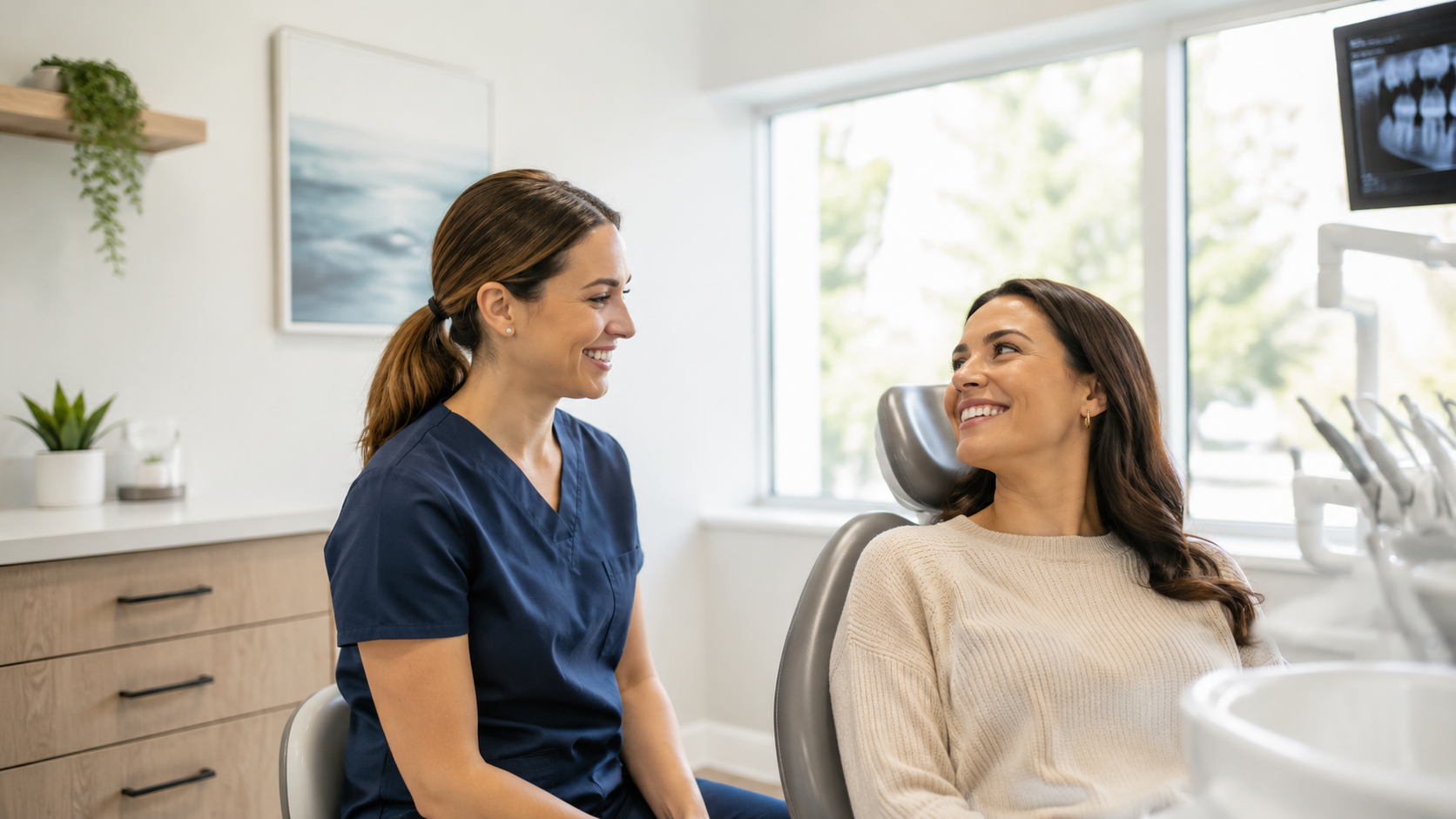
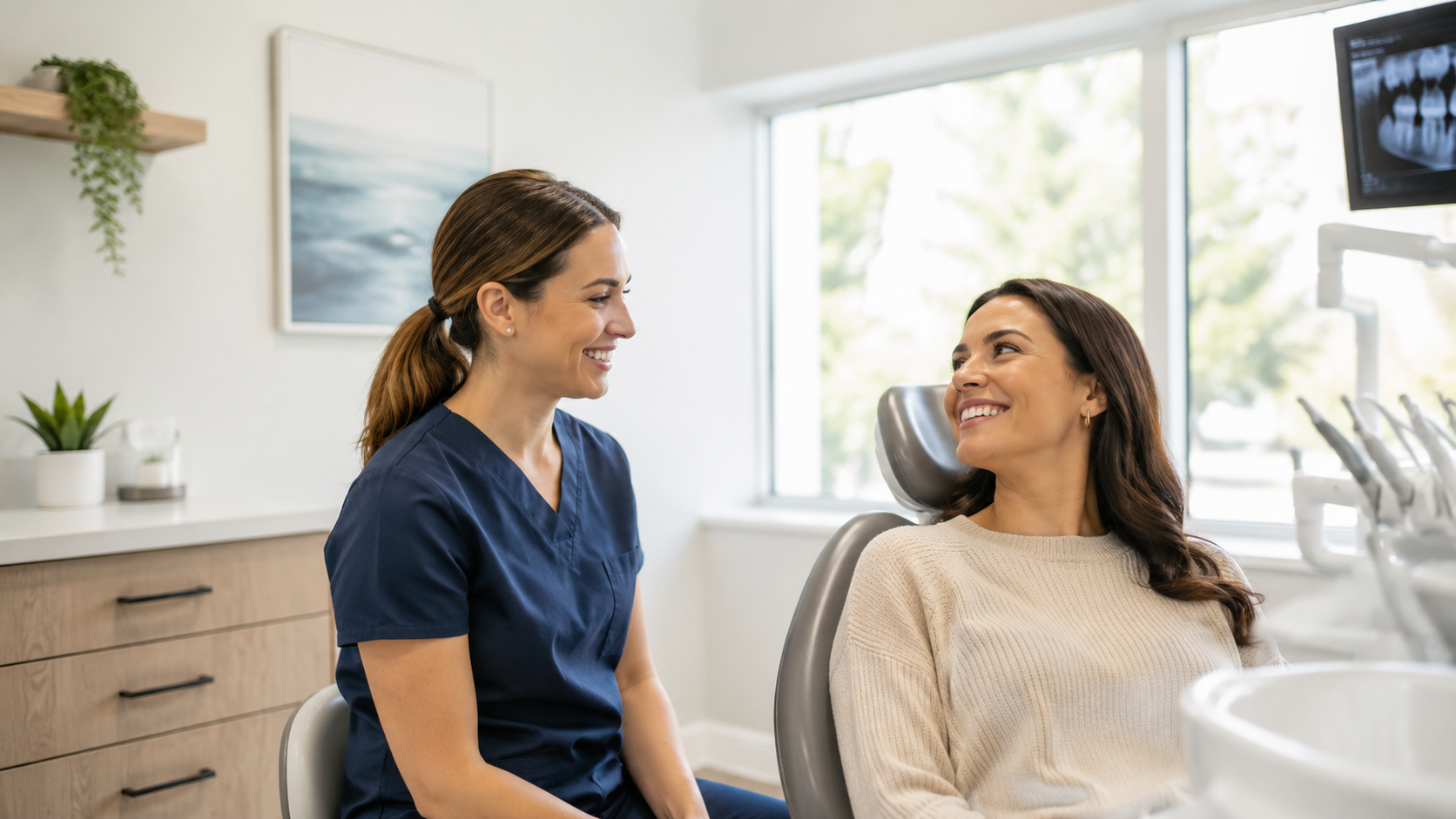
A first Invisalign visit is usually comfortable and informative. The dental team will want to understand the patient’s goals, concerns, oral health, and bite. This visit is also a chance for patients to ask questions and learn whether clear aligners are a realistic fit.
The consultation may include a dental exam, digital scans or impressions, photos, and X-rays if needed. These tools help the clinician evaluate tooth position, jaw relationship, gum health, and bone support. Healthy teeth and gums are important before starting any orthodontic treatment.
Patients may also discuss timing, daily wear expectations, estimated treatment length, payment options, and whether attachments or other tools may be needed. Attachments are small tooth-colored shapes placed on certain teeth to help aligners grip and move teeth more precisely.
How the Invisalign Process Works
While every treatment plan is customized, most Invisalign journeys follow a similar path.
1. Digital Planning
The dentist or orthodontic provider uses digital records to design a treatment plan. This plan maps out how the teeth should move over time. Patients may be able to preview a digital simulation of the planned changes, although actual results depend on biology, compliance, and clinical factors.
2. Custom Aligner Fabrication
Once the plan is approved, the aligners are made to fit the patient’s teeth. Each set is part of the full sequence, with small changes built into every tray.
3. Daily Wear
Most patients are instructed to wear aligners for 20 to 22 hours per day. They remove them for eating, drinking anything besides water, brushing, and flossing. Consistent wear is one of the most important parts of successful clear aligner treatment.
4. Progress Visits
Check-ins allow the dental team to make sure teeth are tracking as expected. These appointments may be shorter and less frequent than traditional braces visits, although timing varies by case.
5. Refinements, If Needed
Some patients need additional aligners near the end of treatment to fine-tune the result. These are often called refinements. They are a normal part of many Invisalign plans and help improve final alignment.
6. Retainers After Treatment
After active treatment, retainers help maintain the new tooth positions. Teeth naturally tend to shift over time, so retainers are an important long-term part of protecting the smile investment.
Is Invisalign Comfortable?
Many patients find Invisalign comfortable because the aligners are smooth and do not have brackets or wires. That said, some pressure or tenderness is normal when starting a new set of trays. This usually means the aligners are working to move the teeth.
Discomfort is often mild and temporary. Patients may notice pressure for the first day or two after switching aligners. If something feels sharp, does not fit correctly, or causes unusual pain, the dental office should be contacted for guidance.
Invisalign vs. Braces: Which Is Better?
There is no single best option for everyone. Invisalign and braces are both effective orthodontic tools when used for the right patient and the right case.
Invisalign may be preferred by patients who want a removable, low-visibility option. It can make eating and oral hygiene easier. However, it requires discipline because the aligners only work when worn as directed.
Braces may be recommended for certain complex tooth movements, severe bite concerns, or patients who may struggle to wear removable aligners consistently. Since braces stay attached to the teeth, they do not rely on daily patient wear time in the same way.
A clinician can explain which option is likely to be more predictable based on the patient’s bite, tooth positions, oral health, and lifestyle.
How Long Does Invisalign Take?
Treatment length varies widely. Some minor cases may take only several months, while more involved cases can take a year or longer. The timeline depends on the complexity of the tooth movements, how well the aligners fit, how consistently they are worn, and how the teeth respond biologically.
Patients can help stay on track by wearing aligners for the recommended number of hours, changing trays as instructed, keeping appointments, and calling the office if an aligner is lost or not fitting properly.
How Much Does Invisalign Cost?
The cost of Invisalign in Pleasanton, CA can vary based on the complexity of the case, treatment length, number of aligners, provider recommendations, and whether refinements or retainers are included. Insurance benefits, flexible spending accounts, health savings accounts, and payment plans may also affect out-of-pocket cost.
Because each smile is different, the most accurate estimate comes from an in-person consultation. Patients should ask what the fee includes, whether retainers are separate, and how insurance claims are handled.
Tips for Success With Invisalign
Clear aligners are simple to use, but good habits make a big difference. Patients can support a smoother experience with a few practical steps.
Wear Aligners Consistently
Aligners should be worn as directed, usually 20 to 22 hours per day. Taking them out too often can slow progress or cause trays to stop fitting correctly.
Keep Aligners Clean
Patients should rinse aligners when removing them and clean them daily. Hot water should be avoided because it can warp the plastic. The dental team can recommend safe cleaning methods.
Brush and Floss Before Reinserting
Putting aligners over food particles or sugary residue can increase the risk of plaque buildup, cavities, and bad breath. Brushing after meals is ideal. When brushing is not possible, rinsing thoroughly before reinserting aligners can help until proper cleaning is available.
Use the Case
Many aligners are lost when wrapped in napkins or placed loosely in a pocket. Using the case every time helps prevent accidental damage or disposal.
Do Not Skip Retainers
The end of aligner treatment is not the end of orthodontic care. Retainers help keep the smile stable. Patients should follow their provider’s instructions on how often to wear them.
Who May Not Be a Good Candidate?
Invisalign is a helpful option for many patients, but it is not ideal for every situation. Patients with untreated gum disease, active cavities, certain severe bite problems, or complex jaw growth concerns may need other care first or a different orthodontic approach.
Clear aligners also require responsibility. A patient who frequently forgets to wear aligners or loses them may not get the best outcome from a removable system. In those cases, braces may be more practical.
The goal is not simply to choose the most popular treatment. The goal is to choose the option that is safest, healthiest, and most predictable for the patient’s smile.
Choosing an Invisalign Provider in Pleasanton, CA
When searching for Invisalign in Pleasanton, CA, patients should look for a dental team that takes time to explain options clearly. A good consultation should feel comfortable, not rushed. Patients should understand what Invisalign can do, what limitations may exist, and what responsibilities they will have during treatment.
Helpful questions to ask include:
- Is Invisalign appropriate for this specific bite and alignment concern?
- How long might treatment take?
- Will attachments, elastics, or refinements be needed?
- How often are progress visits scheduled?
- What happens if an aligner is lost or does not fit?
- Are retainers included in the treatment fee?
- What payment or financing options are available?
Patients should feel welcome to ask questions. A confident, patient-centered dental team will be happy to explain the process in plain language.
Frequently Asked Questions About Invisalign
Is Invisalign noticeable?
Invisalign aligners are clear and designed to fit closely over the teeth, so they are usually much less noticeable than metal braces. However, they are not completely invisible. Attachments or elastics may be visible in some cases.
Can patients eat with Invisalign?
No. Patients should remove aligners before eating. This helps prevent damage, staining, and trapped food. Aligners should also be removed before drinking anything other than water.
Does Invisalign hurt?
Some pressure or soreness is common, especially when switching to a new aligner. This discomfort is usually temporary. Severe pain, poor fit, or sharp edges should be discussed with the dental office.
How often should aligners be worn?
Many patients are instructed to wear aligners 20 to 22 hours per day, but the exact recommendation may vary. The treating clinician will provide specific instructions.
Can teenagers use Invisalign?
Many teens can be candidates for Invisalign, depending on their dental development, alignment needs, and ability to wear aligners consistently. A consultation can help determine whether clear aligners or braces are the better fit.
What happens after Invisalign treatment?
Patients usually receive retainers to help maintain the new tooth positions. Without retainers, teeth can shift over time. Retainer wear instructions vary and should be followed closely.
Is Invisalign faster than braces?
Sometimes, but not always. Treatment speed depends on the complexity of the case, the type of tooth movement needed, and patient compliance. A dental professional can provide a more realistic estimate after an exam.
A Straighter Smile Can Start With a Conversation
Invisalign offers a modern, discreet way for many patients to improve their smile alignment without the look and feel of traditional braces. For patients exploring Invisalign in Pleasanton, CA, the best first step is a personalized consultation with a qualified dental provider.
Elite Dental Orthodontics – CA can help patients understand their options, ask questions, and decide whether clear aligners fit their smile goals and lifestyle. A comfortable, informed conversation can make the path to a healthier-looking smile feel much easier.